How Big Is a File Cabinet? Standard Sizes
File cabinet dimensions depend on the style and drawer layout. The examples here range from 14.3 to 36 in wide and 25.39 to 52 in high; check outside measurements, open-drawer clearance, and folder fit before choosing.
On this page (9 sections)
- What are standard file cabinet dimensions?
- Who should choose each cabinet?
- How do vertical and lateral dimensions differ?
- How do file size and drawer count affect your choice?
- How should you measure a space for a file cabinet?
- Which file cabinet dimensions work under a desk?
- How should you set up and care for a file cabinet?
- What mistakes should you avoid before buying?
- How do you choose the right file cabinet dimensions?
File cabinet dimensions include width, depth, and height, but a useful fit also needs room for open drawers and the right folders. The examples below range from compact vertical cabinets to a tall lateral model, so start with your available space and filing needs.
Measure the spot before choosing a drawer count. A cabinet that fits against the wall can still block your chair, and an extra drawer may hold supplies rather than files.
What are standard file cabinet dimensions?
There is no single standard size for every file cabinet. Use these 3 examples as reference points, then compare the exact model you plan to buy.
| Cabinet | Width | Depth | Height | Drawer layout |
|---|---|---|---|---|
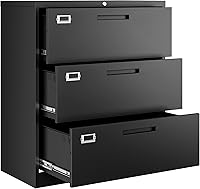
| BYNSOE 2-Drawer Steel Vertical | 15 in | 17.71 in | 25.39 in | 2 equal-size drawers |
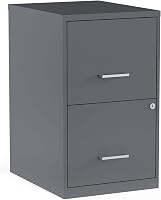
| Staples 3-Drawer Vertical Lockable | 14.3 in | 18.9 in | 26.8 in | 2 file drawers and 1 accessory drawer |
| Letaya 4-Drawer Metal Lateral | 36 in | 16 in | 52 in | 4 wide drawers |
Read dimension labels carefully because stores may present the numbers in different orders. D × W × H means depth, width, then height, not width first.
These are outside measurements, not usable drawer measurements. Handles, wall trim, and the space needed to reach folders also affect placement.
Which file cabinet dimensions suit your room?
Choose a narrow cabinet for a gap beside a desk, a low cabinet for a measured desk opening, or a wider cabinet for an open wall. Make that choice before comparing locks, finishes, or drawer counts.
Tape the cabinet's footprint onto the floor to see how much room remains. Check the space with your chair pulled out and nearby doors open, since an empty room can make a tight fit look workable.
Who should choose each cabinet?
Choose the BYNSOE for 2 filing drawers, the Staples for letter files plus small supplies, or the Letaya for a larger mixed-size filing setup. Each solves a different storage problem.
BYNSOE: for a compact filing spot
The BYNSOE suits a home office that needs 2 equal-size drawers without a wide cabinet front. Its full-extension ball-bearing slides let the drawers open fully, which helps when reaching folders near the back.
One keyed lock secures both drawers, and 2 keys are included. Drawer label holders help separate household records from work papers without opening both drawers to find a category.
BYNSOE describes storage for A4, letter, and legal documents, but loose-document storage and hanging-folder support are different requirements. Confirm the hanging arrangement if your current system depends on legal-size hanging folders.
Skip this model if you want a separate shallow supply drawer or a cabinet that arrives ready for use. It requires assembly, so allow a clear work area before moving it into a tight spot.
Staples: for letter files and desk supplies
The Staples suits someone who wants everyday papers and small office tools in one narrow cabinet. Its 2 filing drawers support letter-size hanging files, while the accessory drawer gives pens and other tools a separate home.
That layout makes sense if your desktop collects supplies that would otherwise get buried beside folders. Precision ball-bearing glides support drawer movement, and a built-in keyed lock provides lockable storage.
Skip it if you need 3 full filing drawers or legal-size hanging-file storage. The extra drawer adds organization, not a third file section.
It arrives partially assembled. Review the remaining assembly steps before planning to fill it immediately.
Letaya: for a larger filing area
The Letaya suits an office with enough wall space for 4 wide drawers and several groups of records. Adjustable hanging bars support A4, letter-size, and legal-size hanging folders, which helps when your paperwork uses more than one format.
Its steel body has a powder-coated finish, and it includes a keyed lock. Letaya describes an interlock mechanism intended to help prevent tipping, but careful placement and loading still matter.
Skip this model for a typical under-desk space or a small collection of household papers. At 110 lb, it also needs a planned move and assembly location.
Assembly tools and instructions are included. Choose its final position before filling the drawers, since stored papers add weight.
How do vertical and lateral dimensions differ?
Vertical cabinets use less wall width, while lateral cabinets spread storage across a wider front. Neither style guarantees a particular height or open-drawer clearance.
A narrow vertical cabinet can fit beside furniture, but you still need room in front to pull out a drawer and reach the back. A lateral cabinet needs a wider clear area, including room to approach either side of its drawers.
For more detail, read what a lateral file cabinet is and compare lateral vs. vertical file cabinets.
How do file size and drawer count affect your choice?
Count usable filing drawers and check folder support before judging capacity. Outside size alone won't show whether your existing folders will work.
Letter paper measures 8.5 × 11 in, legal paper measures 8.5 × 14 in, and hanging folders need room for their frames and hooks. A drawer that accepts loose legal documents may not support legal hanging folders.
Folder orientation matters too. Adjustable rails can change the filing arrangement, but you should confirm the intended setup before buying folders in bulk.
Start by grouping the papers you plan to keep and checking how much drawer space they occupy. Leave room to separate folders and add new records, since tightly packed files are harder to read and remove.
Use our guide to choosing a letter- or legal-size file cabinet for folder sizes. The complete file cabinet buying guide covers other features that affect your choice.
How should you measure a space for a file cabinet?
Measure the closed cabinet space, the drawer-use space, and the delivery route separately. All 3 need to work.
- Measure the narrowest width between walls, furniture, or desk legs.
- Measure depth from any baseboard or obstruction that prevents the cabinet from sitting against the wall.
- Measure height to the lowest shelf, brace, desktop drawer, or other obstruction.
- Check the full drawer extension, then allow space for you to stand or sit in front.
- Check doorways, hallway turns, and the route to the assembly area.
Don't use the cabinet's outside depth as its drawer-extension measurement. If you can't confirm how far the drawers project, resolve that before ordering for a tight aisle.
Check nearby doors and furniture drawers too. Two items can fit side by side while their handles or open drawers collide.
Which file cabinet dimensions work under a desk?
Use the desk's clear opening, not its overall height, to choose an under-desk cabinet. A center drawer or support bar can reduce clearance well below the desktop.
Both compact vertical examples here are under 27 in high, but neither is an automatic fit. Compare width between the legs and make sure your chair can move without hitting a cabinet handle.
For a shared desk opening, mark the cabinet footprint and sit in your normal working position. Keep enough room to place both feet comfortably and turn toward the files.
Our guide to file cabinets that fit under a desk can help narrow the options once you have those measurements.
How should you set up and care for a file cabinet?
Assemble and position the cabinet before loading it, then check drawer movement while it's empty. Follow its instructions for hardware, hanging bars, locks, and any anchoring requirements.
Use a firm, level location so the cabinet doesn't rock. Open and close each drawer before adding papers, and correct alignment problems before extra weight makes them harder to fix.
Place heavier files in lower drawers and open only one drawer at a time. An interlock is an added feature, not permission to overload drawers or ignore the assembly instructions.
Set the hanging bars to match your folders before filling them. Our guide to hanging folders in a file cabinet explains how the support arrangement affects folder fit.
Keep papers below the drawer edges and clear of the slides. Wipe the cabinet with a soft, lightly damp cloth, dry it afterward, and follow the finish-care instructions rather than using abrasive cleaners.
Keep a spare key in a separate place. Avoid forcing a drawer shut over a raised folder or loose office tool.
What mistakes should you avoid before buying?
The biggest mistakes are measuring only the closed footprint and assuming every drawer holds files. Check both working space and drawer purpose.
Don't choose a larger cabinet just to avoid sorting papers. Remove duplicates and records you no longer need first, then size the cabinet around what you will keep.
Don't treat a keyed lock as fire or water protection. These examples offer lockable storage, but no fire-protection specification is included here.
If you're still deciding between shapes, browse file cabinet types and sizes after measuring your room. That keeps the choice tied to a usable space rather than appearance alone.
How do you choose the right file cabinet dimensions?
Pick the cabinet that fits your files and leaves comfortable access after installation. Use file cabinet dimensions to rule out poor fits before choosing features.
Choose the BYNSOE for 2 compact filing drawers, the Staples for letter files plus a supply drawer, or the Letaya for a larger mixed-format filing area. Skip any option that crowds your chair, blocks a walkway, or lacks the folder arrangement you need.
Before ordering, make one final check with your actual folders and room measurements. Our letter- and legal-size file cabinet guide can help settle the folder-fit decision.
Frequently asked questions
What are standard file cabinet dimensions?
There is no single standard size for every file cabinet. The examples in this guide range from 14.3 to 36 in wide and 25.39 to 52 in high.
Use each model's width, depth, and height to check room fit, then confirm folder compatibility and clearance for fully open drawers.
How deep should a file cabinet be?
Choose a cabinet depth that fits the room while leaving space for open drawers and a person using them. The examples here are 16 to 18.9 in deep.
Outside depth doesn't tell you the usable drawer depth or supported folder size, so check those separately before choosing.
How tall is a 4-drawer file cabinet?
The Letaya 4-Drawer Metal Lateral File Cabinet is 52 in high, but other 4-drawer cabinets can differ. Drawer count doesn't determine height because drawer size and cabinet layout vary.
Measure below shelves and windows, and make sure you can comfortably reach and read folders in the upper drawer.
Will a file cabinet fit under a desk?
A file cabinet fits under a desk only if it clears the lowest brace or drawer and fits between the legs. Its open drawers must also clear your chair.
Measure the actual opening rather than the desktop height, and leave enough knee space to sit without twisting around the cabinet.