File Cabinets for Home: The Complete Buying Guide
Choose a file cabinet that fits your folder sizes, paper volume and room layout. Pick vertical for limited wall width, lateral for broad drawers, or mobile storage for files you want beside your desk.
On this page (13 sections)
- How do you choose a file cabinet for home?
- Should you buy a vertical or lateral file cabinet?
- What file cabinet size should you choose?
- How many drawers do you need?
- Does a home file cabinet need a lock?
- Is a mobile file cabinet right for your home office?
- Which of these four file cabinets fits your routine?
- Which file cabinet features matter most?
- How do you set up a file cabinet safely?
- How do you keep a file cabinet organized?
- How should you care for drawers, rails and locks?
- What mistakes should you avoid when buying a file cabinet?
- Which file cabinet should you choose?
The right file cabinet for home holds your folders, fits your room and makes papers easy to put away. Choose a vertical model for limited wall width, a lateral model for broad drawers, or mobile storage for files you want beside your desk.
Start with the papers you keep, not the number of drawers that looks useful. A compact cabinet with a clear filing plan can serve you better than a large unit filled with unsorted stacks.
How do you choose a file cabinet for home?
Choose a home file cabinet by matching folder fit, usable storage and open-drawer space to your routine. Check these before comparing locks, wheels or finishes.
Work through this checklist in order:
- Gather your papers. Separate records you need to keep from duplicates, empty envelopes and papers awaiting action.
- Identify folder sizes. Check whether you use letter, legal, A4 or a mix, including hanging folders.
- Estimate storage needs. Stand filled folders together without squeezing them and measure the space they occupy.
- Measure the location. Include the cabinet footprint, drawer opening and room for you to stand or sit.
- Choose the drawer layout. Decide how much space should hold files and how much should hold supplies.
- Plan access. Consider who uses the cabinet, how often they open it and whether it needs to move.
Keep some unused filing space so you can add papers and slide folders apart. Buying just enough room for today's tightly packed records makes the cabinet harder to use as soon as new paperwork arrives.
For a small collection that you move between rooms or store on a shelf, compare a file cabinet with a file box before committing floor space. A cabinet earns its place when regular access or paper volume makes drawers useful.
Should you buy a vertical or lateral file cabinet?
Choose a vertical cabinet for limited wall width and a lateral cabinet for a broad filing area. Compare actual measurements because style alone does not tell you drawer depth, usable capacity or opening clearance.
Vertical cabinets can fit beside a desk or in a narrow wall gap. Their drawers pull toward you, so a nearby chair, bed or door can make an otherwise suitable spot awkward.
Lateral cabinets spread storage across a wider cabinet. That can suit a shared filing wall where you want several groups of folders within one broad drawer.
| Style | Often suits | Main trade-off |
|---|---|---|
| Vertical | Narrow wall spaces and separate filing categories | Taller models put some drawers farther from seated reach |
| Lateral | Broad walls and wide groups of files | Uses more wall width |
| Mobile | Files kept beside a changing workstation | Needs a clear rolling path |
| Stationary | A permanent filing area | Harder to reposition once loaded |
Mobile and stationary describe how a cabinet sits or moves, rather than how its files are arranged. You still need to check the drawer layout and folder support.
For a closer comparison, read lateral vs vertical file cabinets. If you're still deciding how much floor space to allow, see standard file cabinet dimensions.
What does vertical mean in a file cabinet?
A vertical file cabinet generally uses a narrower drawer face, with files arranged into the drawer's depth. The practical benefit is less wall width, especially when several full-size filing drawers are stacked.
Height is the trade-off as drawer count grows. Keep your most-used records at a comfortable reach rather than choosing a tall cabinet solely because it fits the floor plan.
What does lateral mean in a file cabinet?
A lateral file cabinet has a wider drawer face and can support files across that width, depending on its rails. Check the permitted folder arrangement before planning separate rows or mixed sizes.
Broad drawers also need room beside nearby furniture for comfortable access. A cabinet tucked behind a desk corner may be hard to use even when the drawer can technically open.
What file cabinet size should you choose?
Choose a cabinet that fits the room, the opening space and the folders inside. Outside dimensions answer only the first part.
Measure from the narrowest points around the intended spot. Baseboards, desk legs, wall outlets and door trim can reduce the space available near the floor.
For drawer clearance, allow space for the drawer at full extension and for your body in front of it. If you file while seated, include the chair's position and the room needed to turn toward the drawer.
Under a desk, measure below the lowest apron, support bar or cable tray. Check knee space too, since a cabinet that fits beneath the desktop can still make the workstation cramped.
You can mark the proposed footprint on the floor with removable tape. Place a box or chair at the cabinet's front edge to judge whether the remaining walkway feels usable.
Use our file cabinet dimensions guide to plan measurements, but confirm the exact model before ordering. Standard size ranges cannot account for every handle, caster or desk frame.
Match the rails to your file cabinet folders
Folder compatibility depends on rail spacing and usable drawer space, not just paper dimensions. Letter paper measures 8.5 x 11 inches, legal measures 8.5 x 14 inches, and A4 measures about 8.3 x 11.7 inches.
Hanging folders include hooks that sit on rails, so a drawer that holds loose papers may not support the matching hanging folder. Use the folder format named for the cabinet rather than guessing from its exterior width.
If you use several sizes, decide which drawer will hold each one before buying accessories. Our guide to hanging folders and file cabinet rails explains how to check the support system.
How many drawers do you need?
Count full-size filing drawers, then compare their usable space with your paper volume. Total drawer count can be misleading when some drawers are intended for supplies.
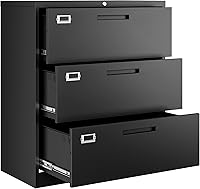
The DEVAISE model below has one hanging-file drawer within its three-drawer layout. It serves a different purpose from a cabinet built around several large filing drawers.
Start with broad groups such as household records, work records and papers needing action. Smaller categories can share a drawer with labeled hanging folders, so each subject does not need its own drawer.
Two full-size drawers can suit a household with a modest record collection. Four may make sense when you keep separate business, property or family records and want clear divisions.
Do not buy extra drawers just to avoid sorting old paperwork. First remove what you no longer need under the retention rules that apply to your records.
For more options by drawer count, compare 2-drawer file cabinets, 3-drawer file cabinets and 4-drawer file cabinets.
Does a home file cabinet need a lock?
Choose a lock when you need to limit casual access to private papers in a shared space. A basic cabinet lock is useful access control, but it should not be treated as a safe.
Check which drawers lock together. If you share the cabinet, one lock for every drawer means anyone with a key can access all of them.
A key lock and a drawer interlock serve different purposes. The key controls access, while an opening interlock may restrict drawer movement to reduce tipping risk.
Do not assume a steel body or lock offers fire protection. Store documents requiring stronger protection in storage designed for that need, and keep secure digital copies where appropriate.
Give the spare key a fixed place away from the cabinet. If one goes missing, see our advice on replacing a lost file cabinet key.
Is a mobile file cabinet right for your home office?
Choose a mobile cabinet when repositioning files is part of your routine. A stationary model suits a filing area that stays in one place.
Wheels help when you want to bring active files beside a desk and move them away afterward. Thick rugs, floor transitions and cords can make that movement less convenient.
Check the full route rather than just the final parking spot. A mobile cabinet needs enough turning room to clear desk legs without pulling cables or striking nearby furniture.
Close the drawers before moving it and follow the manufacturer's instructions about moving a loaded cabinet. Do not pull a cabinet across the room by an open drawer.
Mobility also changes under-desk fit because casters contribute to assembled height. Compare the trade-offs in our guide to file cabinets on wheels vs stationary cabinets.
Which of these four file cabinets fits your routine?
Choose the DEVAISE for desk-side mixed storage, MIIIKO for separate file groups, Letaya for wide drawers or BYNSOE for a smaller stationary setup. BraveBasket compared their dimensions, drawer layouts, folder support and setup needs.
These options solve different storage problems. Start with the role the cabinet will fill, then check the measurements and compromises below.
DEVAISE 3-Drawer Locking File Cabinet: for desk-side files and supplies
Choose the DEVAISE if you want one hanging-file drawer plus separate supply storage near your desk. Skip it if your main goal is several drawers of paper storage.
Its bottom drawer has a removable hanging bar for letter, legal and A4 folders. Full-extension slides let you reach the back without working around a drawer that stops partway out.
The cabinet measures about 17 inches deep, 15 inches wide and 24 inches high. That makes it a candidate for desk-side or under-desk placement, provided your desk frame and leg space allow it.
It arrives assembled except for the casters. The five-wheel arrangement includes a front center caster that supports the extended drawer, though safe loading and careful use still matter.
The cold-rolled steel body weighs 41.3 pounds, so plan how you'll get it into place before attaching the wheels. One locking system secures all three drawers, and two keys are included.
This layout suits someone who wants pens, small office items and active files in one cabinet. For a paper-heavy archive, choose a model with more full-size filing drawers instead.
MIIIKO 4-Drawer Metal File Cabinet with Lock: for separate record groups
Choose the MIIIKO if you want four large filing drawers within a narrow footprint. Skip it if you need storage beneath a desk or expect to move the cabinet often.
It measures 17.71 inches deep, 15 inches wide and 50.11 inches high. The tall layout lets you divide files by person, property or work area without using the wall width of a lateral cabinet.
Each high-side drawer has adjustable hanging rails for letter, legal and A4 files. Full-extension rails help with access to folders at the back.
The top lock secures all four drawers, and the cabinet includes a drawer interlock with an anti-tip mechanism. Follow the installation instructions rather than relying on that mechanism as the only stability measure.
Assembly is required, with parts, hardware and tools included. At 90 pounds, this is a cabinet to place carefully and keep in a dedicated filing area.
It suits substantial household or home-business records that benefit from separate drawers. If only one or two drawers would be used, a shorter model saves height and keeps more storage within easy reach.
Letaya 3-Drawer Lateral File Cabinet with Lock: for a wide filing wall
Choose the Letaya if you have broad wall space and want wide filing drawers. Skip it for a narrow desk gap or a typical seated-height under-desk position.
The cabinet measures 36 inches wide, 16 inches deep and 40 inches high. Its width is the main placement requirement, while its height calls for a separate filing spot beside most desks.
Three drawers have adjustable hanging bars for A4, letter and legal folders. Plan the rail arrangement before deciding how mixed folder sizes will share the cabinet.
The all-steel body has a powder-coated finish, and the drawers use ball-bearing full-suspension slides. A key lock secures the drawers, while an interlock helps limit drawer opening.
Assembly is required, with paper instructions and video guidance available. Leave enough floor space to sort the wide panels and assemble the unit without working in a cramped corner.
This cabinet suits a shared record area where broad categories can occupy separate drawers. Choose a narrower vertical model if wall space matters more than drawer width.
BYNSOE 2-Drawer Steel Vertical File Cabinet: for modest household records
Choose the BYNSOE if you need two similar-size drawers in a low stationary cabinet. Skip it if mobility is essential or you want several drawers for separate archives.
It measures 17.71 inches deep, 15 inches wide and 25.39 inches high. Check that height carefully if you plan to place it beneath a desk apron.
The drawers can accommodate A4 papers, letter-size papers, legal documents and file boxes. Confirm the hanging-folder arrangement you need before choosing it specifically for suspended files.
Both drawers have full-extension ball-bearing slides and long handles. Label holders give you a simple way to separate active household papers from longer-term records.
One lock secures both drawers, and two keys are included. Assembly is required, so allow time to align the cabinet and drawer parts before loading files.
Its two-drawer layout suits a small collection with clear categories. If supplies would take up one whole drawer, consider whether a mixed-storage cabinet would leave more useful space for your papers.
Which file cabinet features matter most?
Prioritize folder support, drawer access and a usable layout before extra features. A feature earns its place when it removes a task you would otherwise find awkward.
Full-extension slides help with frequent filing because rear folders remain accessible. They are especially useful when a drawer holds several active categories rather than records you rarely open.
Adjustable rails matter when your files use more than one format. Check how changing the rails affects the rest of the drawer, rather than assuming all supported sizes fit together at once.
Drawer labels help in a shared cabinet or a room with several storage units. Use plain names such as “Home records” instead of labels that only one person understands.
Weight limits need careful reading. A total cabinet capacity is not a per-drawer allowance, and neither number tells you how many folders will fit.
Assembly effort matters too. A mostly assembled cabinet reduces setup work, while a cabinet built from panels needs clear floor space and careful alignment.
How do you set up a file cabinet safely?
Set up the cabinet on a firm, level surface, follow its assembly instructions and check drawer operation before loading it. Plan the delivery route as carefully as the final location.
Measure doorways, tight corners and stairs along the route. For a heavy unit, arrange enough help and suitable moving equipment rather than lifting it alone.
If assembly is required, sort the parts and hardware first. Follow the fastening sequence, and do not force panels together when holes fail to line up.
Check that drawers sit squarely and open without scraping. Try the lock while the drawers are empty so an alignment problem does not leave important papers trapped inside.
Follow any anchoring instructions and check for pipes or wiring before drilling. Our guide explains how to keep a file cabinet from tipping.
Load heavier contents lower down and open only one drawer at a time. Keep children from climbing or hanging on drawers, and never use an open drawer as a step.
For a mobile cabinet, make sure each caster is attached correctly before adding files. A support wheel helps carry a drawer, but it does not make careless loading safe.
How do you keep a file cabinet organized?
Use broad categories, clear labels and space between folders so papers are easy to file and retrieve. Put frequently used records within comfortable reach.
Create a small place for papers needing action before they enter long-term storage. Bills to pay and forms to complete should not disappear among finished records.
Use hanging folders for broad groups and inner folders for smaller subjects. For example, one insurance group can contain separate home, vehicle and policy correspondence folders.
Pick one labeling pattern and keep it consistent. Names, subjects or dates can all work, but mixing systems within the same group makes searching slower.
Leave enough room to move folders apart with one hand. If you must compress the row to insert a sheet, reduce the contents or move a category elsewhere.
Set a regular time to file loose papers and review crowded folders. Remove records only after checking the retention requirements that apply to them.
Our guide to a home filing system can help you choose categories and build a routine. The aim is a system another household member can understand without a long explanation.
How should you care for drawers, rails and locks?
Keep the cabinet clean, dry and free of overloaded drawers to support smooth use. Small changes in drawer movement are a reason to inspect the contents and alignment.
Wipe the exterior with a soft cloth and dry any damp areas. Follow the finish-care instructions before using cleaners, since harsh chemicals or abrasive pads can damage coatings.
Keep clips, loose papers and folder hooks away from the slide path. A folder caught behind a drawer can interfere with closing even when the slide itself is sound.
Do not force a drawer that starts to bind. Remove accessible contents, check for obstructions and follow the manufacturer's guidance before adjusting parts.
Use only lubricants approved for the relevant slides or lock. Spraying oil into every moving part can leave residue that attracts dirt or reaches your papers.
After moving the cabinet, check that it sits level and the drawers still align. Keep drinks away from stored records, even if the cabinet has a coated steel surface.
What mistakes should you avoid when buying a file cabinet?
Avoid choosing by drawer count, exterior size or appearance alone. The common buying errors come from overlooking how the cabinet will be used.
- Counting supply drawers as filing drawers. Check which drawers actually support your folders.
- Measuring only the closed footprint. Include drawer travel, your chair and the walking route.
- Assuming all paper sizes hang. Loose-document capacity and hanging-folder support are different.
- Leaving no room for growth. Packed folders make everyday filing harder.
- Buying wheels for an awkward route. Rugs, thresholds and desk supports can limit their value.
- Treating a lock as complete document protection. Access control, fire protection and water protection are separate needs.
- Ignoring setup work. A cabinet that requires assembly needs room, time and careful alignment.
Avoid using the cabinet top as an unplanned pile for incoming papers. Give those papers a defined tray or folder so the cabinet remains part of the filing system.
Which file cabinet should you choose?
Choose the file cabinet that solves your main storage problem: desk-side access, separate archives, wide drawers or a compact household setup. Make the final choice after assigning your folders to actual drawers.
Pick DEVAISE when one hanging-file drawer and separate supply storage fit your workday. Its mobile layout is useful when you want files close while working and out of the way afterward.
Pick MIIIKO when you need several full-size filing drawers and have room for a tall cabinet. Choose Letaya when a broad filing wall works better than a narrow tower.
Pick BYNSOE when two drawers cover your records and you want a low stationary unit. For a focused comparison with more options, see our best file cabinets for a home office.
If folder orientation is still the deciding issue, use the lateral vs vertical guide. Then mark the footprint, gather your folders and confirm that both the cabinet and its daily use fit the room.
Frequently asked questions
What type of file cabinet is best for home use?
A vertical cabinet suits limited wall width, a lateral cabinet suits a broad filing area, and a mobile cabinet suits files kept beside a desk. Start with your folder sizes and paper volume, then choose a layout that leaves room to open drawers and move through the room.
How many drawers do I need in a home file cabinet?
Count full-size filing drawers rather than total drawers, then match their space to the folders you keep. Two drawers may cover household records, while four can separate larger collections; a cabinet with small supply drawers may offer less hanging-file space than another model with the same drawer count.
Should I choose a vertical or lateral file cabinet?
Choose vertical when wall width is limited and lateral when you have room for broad drawers. Measure each cabinet rather than assuming its style determines depth or capacity; check the open-drawer space, folder orientation and hanging rails, since those details affect how easily you can reach and sort papers.
Do I need a locking file cabinet at home?
Choose a lock if you need to limit casual access to personal or work papers in a shared room; confirm which drawers it secures and store the spare key separately. A basic cabinet lock does not guarantee burglary protection, and it gives no protection against fire or water by itself.
What size file cabinet fits under a desk?
A cabinet fits under a desk when its assembled height, width and depth clear the desk frame and leave enough space for your legs. Measure beneath aprons, supports and cables, then allow for drawer opening; confirm the final height with casters attached if you choose a mobile model.
Can one file cabinet hold letter and legal files?
Yes, some cabinets support both letter and legal hanging folders through adjustable or removable rails. Confirm support for each folder size rather than relying on the cabinet's outside dimensions; space for loose legal documents does not automatically mean the drawer can hold legal-size hanging folders on its rails.