File Cabinet on Wheels vs Stationary: Which to Buy? (October 2026)
Choose a file cabinet on wheels for regular repositioning or easier access beneath a desk. Choose a stationary cabinet for a permanent filing spot, then compare drawer layout, clearance and floor conditions.
On this page (9 sections)
- File cabinet on wheels vs stationary: which fits your routine?
- Who should choose each cabinet?
- How do you check desk fit before buying?
- What drawer layout fits your files?
- How much do floors and rolling routes matter?
- Do locks and fixed bases make cabinets safer?
- How should you assemble and load the cabinet?
- How do you care for a cabinet in daily use?
- Which cabinet should you buy?
Choose a file cabinet on wheels if you'll pull it out from beneath a desk or move files between work areas. Choose a stationary cabinet if it has a permanent home and you can reach its drawers comfortably there.
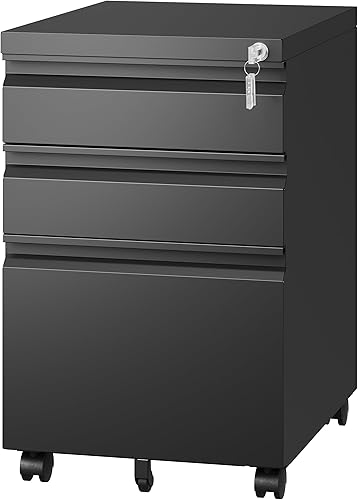
The DEVAISE suits a tight desk opening, the Letaya adds locking casters, and the BYNSOE offers 2 equal-size drawers on a fixed base. Their drawer layouts matter as much as their ability to move.
Start by measuring your space and sorting what you'll store. Our file cabinet buying guide explains the broader cabinet types if you're still choosing a layout.

 Best for shared workspaces
Letaya 3-Drawer Mobile Under Desk File Cabinet
File cabinet on wheels vs stationary: which fits your routine?
Wheels are useful when moving the cabinet solves a regular access problem. A stationary base makes sense when you can file, retrieve papers and clean around the cabinet without shifting it.
A mobile cabinet can serve two desks in a shared room or tuck beneath a work surface after paperwork is done. It also lets you bring folders closer instead of reaching sideways from your chair.
Choose a fixed spot for records you consult occasionally, especially when the route to another desk crosses rugs or thresholds. Moving a loaded cabinet through obstacles can take more effort than carrying a few folders.
Don't buy wheels just because they seem convenient. Picture a normal week and name the places the cabinet would actually go.
Which file cabinet on wheels suits a tight workspace?
The DEVAISE is the better fit for a narrow opening, while the Letaya suits a wider parking spot where locking casters are useful. Measure the rolling route as well as the space beneath the desk.
A cabinet may clear the desk legs but have no room to turn past your chair. Check corners, door openings and nearby furniture before choosing either mobile model.
If the cabinet will mostly stay under your desk, use our under-desk file cabinet guide to compare placement options. Your knees still need room when the drawers are closed.
Who should choose each cabinet?
Choose the DEVAISE for narrow mixed storage, the Letaya for mobile storage with wheel locks, and the BYNSOE for a permanent filing corner. Skip any model whose drawer arrangement doesn't match your papers and supplies.
DEVAISE: for narrow desk openings
The DEVAISE measures 11.8 in wide, 17.7 in deep and 23.2 in high including wheels. Its all-steel body holds 2 utility drawers, a stationery tray and a hanging-file drawer for letter, legal and A4 folders.
That mix suits someone who wants pens, small desk items and active folders within reach. Full-extension slides let you reach contents at the back without leaving the rear of a drawer as dead storage.
The hidden pulls open from the sides, so check that nearby desk panels won't crowd your fingers. A close fit beneath the desk isn't useful if you can't comfortably grasp the drawers.
Skip it if you need 2 separate hanging-file drawers or mostly store bulky items. The narrow body saves floor space, but you should match the drawer interiors to those items before buying.
Letaya: for files shared between work areas
The Letaya measures 14.57 in wide, 17.32 in deep and 24.4 in high. It has 2 small drawers and a lower hanging-file drawer, with adjustable bars for letter, legal and A4 folders arranged front to back or side by side.
Its 5 wheels include 2 locking front casters. That makes it the clearer choice here for someone who wants to reposition the cabinet, then engage wheel locks at the next work area.
Choose it when folder orientation matters to how you read labels or reach documents. Set the bars around your usual folder size rather than rearranging them each time you add paperwork.
Skip it if the extra width crowds your chair or if your papers need more than one dedicated hanging-file drawer. A shared cabinet also needs an agreed parking spot so it doesn't become an obstacle between desks.
BYNSOE: for a permanent filing corner
The BYNSOE measures 15 in wide, 17.71 in deep and 25.39 in high. Its sled base stays in place, and its 2 equal-size drawers have full-extension slides, long handles and front label holders.
Choose it for two clear paper groups, such as household records and work documents. The labels help another household member find the right drawer without opening both.
It can hold documents and office supplies, but don't assume that space for legal documents means a particular hanging-folder rail arrangement. Confirm folder support if hanging files are central to your system.
Skip it if you need to roll the cabinet out for access or want shallow drawers for small supplies. Assembly is also a bigger setup task than attaching casters to the two mobile models.
How do you check desk fit before buying?
Measure height, width, depth and drawer-opening space before choosing a cabinet. The desktop height alone won't tell you whether it fits beneath an apron, crossbar or cable tray.
Measure from the floor to the lowest obstruction. Allow clearance above the cabinet so an uneven floor or slight movement doesn't cause it to scrape the desk.
Use painter's tape to mark the footprint, then sit down in your normal working position. Check your knees, feet, chair arms and footrest rather than judging the empty desk opening.
For drawer access, allow space in front of the cabinet and room for you to stand or sit beside the open drawer. Its closed depth doesn't tell you the full space needed during use.
Compare the measurements with standard file cabinet dimensions if you're deciding between under-desk storage and a separate filing corner. A cabinet beside the desk may give you a better seating position than one beneath it.
What drawer layout fits your files?
Choose drawers around the contents you'll store most often. Count your hanging folders separately from loose papers, stationery and bulky office items.
The two mobile choices divide storage between small supplies and one main file drawer. The stationary choice divides its space into two equal drawers, which suits separate document groups better than a pen-and-paper arrangement.
If supplies are taking over your desktop, our 3-drawer file cabinet guide can help you compare that layout. Don't choose more drawers without checking what each drawer is designed to hold.
Check your folder size before ordering hanging files. Our letter vs legal file cabinet guide explains the difference, which matters when your records include wider documents.
Leave enough room in each file group to slide folders apart and read tabs. Packed folders are harder to remove, and papers pushed above the sides can catch as the drawer closes.
Sort old papers before choosing capacity, then build a few clear categories. Our home filing system guide helps you organize what remains without turning every document type into a separate drawer.
How much do floors and rolling routes matter?
Wheels work best when the whole route is clear and easy to cross. Thick carpet, rug edges, thresholds and loose cords can make a short move awkward.
For a cabinet that will travel between desks, walk the route and check where it must turn. A smooth parking spot won't help if a raised doorway threshold blocks the trip.
Don't force small casters over an obstacle by pulling harder on a drawer handle. Close the drawers, follow the moving instructions and remove contents when needed to make the move manageable.
A stationary cabinet needs a moving plan too. Avoid dragging it across the floor, and arrange help if you can't move the empty cabinet safely.
Keep either style away from floor vents and door swings. Leave access to outlets so routine cable changes don't require a furniture move.
Do locks and fixed bases make cabinets safer?
Drawer locks control access, caster locks limit rolling, and careful loading helps prevent tipping. These are separate jobs, so don't treat one feature as a substitute for another.
All 3 cabinets use one key lock to secure their drawers and come with 2 keys. That suits files you want closed together, but it doesn't let you give someone access to just one drawer.
Keep the spare key somewhere separate and easy to identify. If access becomes a problem, use our guides to opening a locked file cabinet without a key and replacing a lost file cabinet key.
A basic cabinet lock isn't a reason to treat ordinary steel storage as secure storage for every sensitive record. Follow any workplace requirements for the documents you keep at home.
For stability, keep heavier contents low and open one drawer at a time. Never use an open drawer as a step or let children climb on it.
The DEVAISE includes a center front support caster, but safe placement and loading still matter. Our guide to keeping a file cabinet from tipping covers the habits and placement decisions to make before filling it.
How should you assemble and load the cabinet?
Complete assembly and check drawer operation before adding files. The DEVAISE and Letaya arrive assembled except for their casters; the BYNSOE requires assembly.
Clear a work area, protect the floor and identify the parts before starting. Follow the cabinet's instructions for orientation, fasteners and any support components rather than copying another model's setup.
Once upright, check that the cabinet sits evenly and each drawer opens and closes without rubbing. Address a crooked drawer or loose caster before adding weight.
Load gradually, starting with heavier contents in the lower drawer. Keep files upright and avoid placing loose items where they can fall behind or beneath a drawer.
DEVAISE specifies a 330 lb maximum capacity, which isn't a per-drawer allowance. Use the instructions for load placement and moving, and see how much file cabinets weigh and hold for the difference between cabinet weight and storage capacity.
How do you care for a cabinet in daily use?
Keep slides, wheels and drawer paths clear, and clean the finish gently. Small obstructions can make a drawer or caster harder to use even when the cabinet itself has enough space.
Wipe dust with a soft cloth and dry any damp areas promptly. Follow the finish-care instructions, and avoid harsh cleaners or abrasives that could damage the coating.
Remove hair and threads caught around casters, and keep charging cords away from the rolling path. Check caster attachments and other accessible fasteners periodically as directed.
If a drawer starts to resist, first look for protruding folders, loose papers or an item behind it. Don't keep forcing the handle or add lubricant unless the care instructions call for it.
Return a mobile cabinet to its parking spot after use and engage any wheel locks. A clear routine keeps a shared cabinet from blocking a walkway or ending up beyond reach when someone needs a file.
Which cabinet should you buy?
Buy a file cabinet on wheels when regular movement improves access; choose stationary storage when the files have a permanent home. Then choose the drawer layout before making the final fit check.
Pick DEVAISE when your desk opening is narrow and you want supplies above one file drawer. Pick Letaya when you have more width and want locking casters for a cabinet that changes position.
Pick BYNSOE when two equal drawers suit your paper groups and the cabinet can stay where you put it. Pass on it if reaching your records depends on rolling the cabinet out.
Before ordering, mark the footprint and check the drawer-opening path from your usual chair position. Use our under-desk file cabinet guide to settle placement if the cabinet competes with your legroom.
Frequently asked questions
Are file cabinets on wheels stable?
A wheeled cabinet needs correct assembly, balanced loading and careful drawer use to stay stable; keep heavier contents low, open one drawer at a time and follow its instructions for placement. A support caster helps support the cabinet, while wheel locks limit rolling; neither makes unsafe loading acceptable.
Can a file cabinet on wheels go under a desk?
Yes, if its total height clears the lowest desk support and its drawers can open without hitting your chair or legs; include the casters when measuring height, then check width, depth and your seated knee space. Leave enough clearance to roll the cabinet out without scraping the desk.
Is a stationary file cabinet better for heavy files?
Choose by the cabinet's load limits rather than its base style; DEVAISE gives its wheeled cabinet a 330 lb maximum capacity, but that figure isn't a per-drawer allowance or permission to move it fully loaded. Follow drawer limits and moving instructions, and keep the heaviest contents low.
Do wheeled file cabinets lock?
Some have drawer locks, wheel locks or both; the DEVAISE and Letaya each use one key lock to secure all 3 drawers, and the Letaya also has 2 locking casters. Drawer locks limit access to contents; caster locks help keep a parked cabinet from rolling during use.


