How Heavy Is a File Cabinet and What Can It Hold?
How heavy is a filing cabinet? These 3 models weigh 62.4 to 110 lb empty; add your files to estimate loaded weight, and check drawer and total load limits separately.
On this page (9 sections)
- How heavy is a filing cabinet?
- Which cabinet suits your space and moving plans?
- How much weight can a file cabinet hold?
- What should you measure before ordering?
- How should you move a heavy file cabinet?
- How do you set up and care for a filing cabinet?
- Can a heavy filing cabinet still tip over?
- What mistakes should you avoid when comparing cabinet weight?
- How should filing cabinet weight guide your final choice?
These examples answer how heavy a filing cabinet is: the 3 models below weigh 62.4 to 110 lb empty. All have 4 drawers, but their different weights and shapes change how you get them into a room.
Empty weight isn't storage capacity. Choose a cabinet that fits your papers and space, then check its drawer limits before loading it.
How heavy is a filing cabinet?
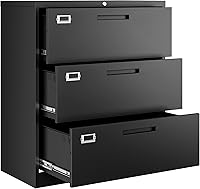
The BYNSOE vertical weighs 62.4 lb, the Staples vertical weighs 85.1 lb, and the Letaya lateral weighs 110 lb. These are examples of specific models, not a weight range for all filing cabinets.
| Cabinet | Empty weight | Dimensions, depth × width × height |
|---|---|---|
| BYNSOE 4-Drawer Vertical | 62.4 lb | 17.71 × 15 × 50.11 in |
| Letaya 4-Drawer Lateral | 110 lb | 16 × 36 × 52 in |
| Staples Heavy Duty 4-Drawer Vertical | 85.1 lb | 26.5 × 14.9 × 51.97 in |
Compare weight and shape together. A narrow cabinet can be deep, while a shallow lateral cabinet can take up much more wall width.
For room planning, see standard file cabinet dimensions. Our guide to lateral and vertical file cabinets explains how each layout affects placement and access.
How heavy is a filing cabinet once it's full?
Loaded weight equals empty cabinet weight plus everything inside it. Paper, folders, dividers, and supplies all count, even when the drawers aren't packed.
Weigh a representative group of filled folders and multiply by the number of similar groups you expect to store. Add other contents separately, and compare each drawer's load with its own limit.
Which cabinet suits your space and moving plans?
Choose BYNSOE for a lighter vertical option, Letaya for wide drawers, or Staples for letter-only filing in a narrow format. Check the access route and paper sizes before choosing among them.
BYNSOE: for mixed paper sizes in a narrow space
The BYNSOE suits a home office that needs A4, letter, and legal hanging folders without a wide cabinet. Adjustable hanging rods let you arrange the drawers for those formats.
Its full-extension ball-bearing slides provide access to files at the back. One key lock secures all 4 drawers, and an interlock prevents another drawer from opening while one is open.
Skip it if you need a cabinet that arrives assembled, since assembly is required. Allow time to seat the drawers correctly: BYNSOE advises checking the rail connections if a drawer sits too high to close.
Letaya: for a wide filing area
The Letaya suits an office with open wall space for lateral filing. Its adjustable hanging bars support A4, letter, and legal folders, while the wide layout gives you a different drawer arrangement from the vertical models.
It has all-steel construction, a powder-coated finish, a key lock, and a drawer interlock. Assembly tools and instructions are included.
Skip it for a cramped wall section or a move you expect to handle alone. It is the heaviest example here, and its height also rules out placement beneath a typical desk.
Staples: for letter-size office records
The Staples suits buyers whose records are letter size and who have room for a deeper vertical cabinet. Its narrow front can fit a wall section that won't take a lateral model, but check the depth carefully.
Skip it if legal-size hanging files are a requirement. The other 2 examples explicitly support that format, so they are better choices for mixed paper sizes.
Staples backs this cabinet with a limited lifetime warranty. Choose it for the filing format and room fit rather than assuming the “heavy duty” name gives you a particular load allowance.
How much weight can a file cabinet hold?
Use the manufacturer's drawer and total cabinet limits. Empty weight measures the cabinet itself; load capacity measures the contents it can safely support.
No drawer or total load limits are established for these 3 examples here. Ask the manufacturer for those figures before buying if your storage includes dense files, books, or supplies.
Check whether a stated allowance applies per drawer or to the whole cabinet. A total limit doesn't mean you can put that entire amount in one drawer.
Don't fill every drawer simply because space remains. Leave enough room to move folders and lift them out without pulling against tightly packed neighbors.
What should you measure before ordering?
Measure the final location, the delivery route, and the drawer-opening space. A cabinet that fits against the wall may still block a walkway when a drawer opens.
Check doorways, hall turns, stair landings, and the space needed to turn the cabinet upright. Compare the cabinet's dimensions with the narrowest point along that route.
At the final spot, check nearby doors, baseboards, outlets, and desk edges. Keep enough working room to stand in front of the open drawer and remove a folder comfortably.
For an upper-floor room or an unusual floor structure, resolve any concern about the loaded weight before ordering. Empty weight alone doesn't describe the load the floor will carry.
How should you move a heavy file cabinet?
Empty it before moving and plan the route before lifting. Removing papers reduces weight and keeps loose contents from shifting.
Use this order:
- Label and box the files by drawer so they can go back in order.
- Remove drawers only if the manual explains the removal method.
- Close and secure any drawers left in the cabinet.
- Clear the route and protect vulnerable flooring and corners.
- Arrange enough help or suitable moving equipment for the weight and shape.
Don't lift the cabinet by drawer handles or use an extended drawer as a grip. Keep people clear of its path, especially on stairs.
Avoid dragging it across the floor. If stairs or tight turns make control uncertain, arrange help from movers equipped for that route.
How do you set up and care for a filing cabinet?
Assemble it as instructed, place it level, and check drawer operation before loading it. A cabinet that rocks or has a poorly seated drawer needs attention first.
Follow the assembly sequence instead of filling finished drawers while other parts remain loose. Check that fasteners, slides, and any interlock parts are fitted as directed.
Set the hanging rods for your folder size before adding papers. See how to hang folders in a file cabinet if you're unsure how rails and folder hooks should fit.
Load lower drawers first and keep heavier contents low, following the cabinet's instructions. Open one drawer at a time, and never force another drawer against an engaged interlock.
Dust the cabinet and wipe ordinary marks with a soft cloth and mild cleaner suitable for its finish. Dry it afterward, and keep spills away from files, locks, and drawer slides.
If movement becomes stiff, remove enough contents to inspect for trapped folders or misaligned parts. Use the steps in why a file cabinet drawer gets stuck before forcing the handle.
Can a heavy filing cabinet still tip over?
Yes, weight alone doesn't prevent tipping. An open drawer moves weight forward, and climbing, uneven placement, or poor loading can make the cabinet unstable.
All 3 examples have interlocks, but that feature doesn't replace correct setup. Follow the manufacturer's anchoring instructions and use hardware suited to the cabinet and wall.
Don't let children climb on drawers, and don't stand on one to reach higher storage. Read how to keep a file cabinet from tipping over before putting a tall cabinet into service.
What mistakes should you avoid when comparing cabinet weight?
Don't treat heavier as automatically better or lighter as easy to move. Match the cabinet to your files, route, and daily use.
Material affects weight, but so do dimensions and construction. Compare exact models rather than assuming every steel cabinet outweighs every wood one; our wood and metal file cabinet guide covers the broader tradeoffs.
Carpet also needs attention. Confirm the cabinet stands level without rocking and follow any installation guidance for the surface beneath it.
Books and tools require a separate capacity check. They can add substantial weight without filling much drawer space, so don't substitute available room for a load limit.
For broader selection help, start with the complete file cabinet buying guide. Then compare 4-drawer file cabinets if this drawer count matches your storage needs.
How should filing cabinet weight guide your final choice?
When deciding how heavy a filing cabinet should be, start with a model you can get into the room safely. Then confirm that its paper format, open-drawer clearance, and load limits suit your files.
Pick BYNSOE for mixed paper sizes with less empty weight to move, Letaya for a wide lateral layout, or Staples for letter-size records where depth is available. Skip any model whose shape creates an awkward route or blocks daily access.
Before ordering, compare 4-drawer file cabinet options against your measurements and confirm capacity for the contents you plan to store.
Frequently asked questions
How heavy is a filing cabinet?
These 3 filing cabinets weigh 62.4 to 110 lb empty, despite all having 4 drawers. Use those weights as model examples, not a range for every cabinet; for a loaded estimate, add the weight of your papers, folders, and other contents to the exact cabinet's empty weight.
How much weight can a file cabinet hold?
Use the exact model's drawer and total load limits, which are separate from its empty weight. If the manual doesn't give those limits, ask the manufacturer before loading it; a heavy steel frame, a spacious drawer, or smooth drawer movement doesn't guarantee a safe storage capacity.
Is a lateral file cabinet heavier than a vertical one?
A lateral cabinet can be heavier, but shape alone doesn't determine weight. Here, the lateral model weighs 110 lb, while the vertical models weigh 62.4 and 85.1 lb; compare exact models, including their width and depth, before planning delivery, moving help, or the final room layout.
Can you move a file cabinet with drawers in it?
Empty the contents first, and remove the drawers themselves only when the manual gives removal instructions. Secure drawers that remain in place, clear the route, and use enough help or suitable equipment for the cabinet; reinstall any removed drawers and check their operation before putting files back.