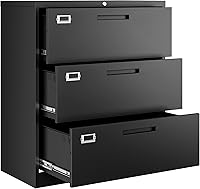
What Is a Lateral File Cabinet?
A lateral file cabinet is a filing cabinet with wide drawers that pull straight out. Choose this layout when you have room across a wall and want hanging files arranged across broad drawers, with folder direction set by the rails.
On this page (9 sections)
- What is a lateral file cabinet, and how does it work?
- How does a lateral cabinet differ from a vertical one?
- What should you measure before buying one?
- Which file sizes can a lateral cabinet hold?
- Do lateral file cabinets need locks and anti-tip features?
- Which lateral file cabinets suit different buyers?
- How should you set up and organize a lateral cabinet?
- What care habits and mistakes matter most?
- Is a lateral file cabinet the right choice for you?
A lateral file cabinet is a filing cabinet with wide drawers that pull straight out. Hanging rails hold folders inside, and their position determines which way the folders face.
Choose this style when you have a broad wall space and want papers grouped across wide drawers. Before buying, measure the room with a drawer open and check that the rails fit your folders.
What is a lateral file cabinet, and how does it work?
A lateral file cabinet is usually wider than it is deep, with drawers that span its front. “Lateral” describes the cabinet's shape, rather than a drawer that slides sideways.
Hanging folders rest by their hooks on rails inside each drawer. Depending on the rail layout, folders may face the front or side, so don't assume every lateral cabinet organizes papers the same way.
Models come in several heights and drawer counts. A low cabinet may fit beside a desk, while a taller unit uses more wall height for separate filing groups.
How does a lateral cabinet differ from a vertical one?
A lateral cabinet uses more width and less depth, while a vertical cabinet usually has a narrow front and deeper drawers. Choose the shape that fits your room with enough space left for access.
Wide drawers can help you separate file groups without stacking cabinets side by side. They also occupy a broader area when open, which matters near a chair, doorway, or shared walkway.
A vertical cabinet can fit a narrow gap beside a desk. However, reaching folders at the back depends on how far its drawers extend and where you stand.
Our lateral vs vertical file cabinet comparison explains these layout tradeoffs in more detail.
What should you measure before buying one?
Measure the cabinet space, delivery route, and drawer-opening area before choosing a model. Outside dimensions tell you where a closed cabinet fits, but they don't describe the space needed to use it.
Record the available width, depth, and height, including baseboards, desk legs, crossbars, and nearby shelves. Check doorways and turns along the route into the room, too.
Use painter's tape to mark the cabinet's footprint on the floor. Then check whether you can stand in front of an open drawer without blocking a doorway or trapping your chair.
For placement under a desk, measure its clear opening rather than the desktop height. Our guide to file cabinet dimensions and standard sizes covers the measurements that matter.
Allow some filing room for future papers, but sort your current records first. Buying around an unsorted pile can leave you storing papers you no longer need.
Which file sizes can a lateral cabinet hold?
A lateral cabinet holds the folder sizes its rails support. Adjustable bars can accommodate different formats, but “wide drawer” doesn't automatically mean every hanging folder will fit.
Check the folder package for letter, legal, or A4 size. Hanging folders need their hooks supported correctly, so measuring the paper inside an ordinary folder isn't enough.
Tabs and bulky files also need clearance. Leave enough room to slide folders apart and lift one out without bending its neighbors.
Our guide to hanging folders in a file cabinet explains rail placement and folder support.
Is a lateral file cabinet suitable for legal files?
A lateral file cabinet suits legal files when its rail positions accept legal hanging folders. If you keep both letter and legal documents, decide whether you want separate drawers or separate rows before choosing a layout.
Don't assume adjustable rails let you mix every size within one row. See letter vs legal file cabinet sizes if you're unsure which folders your records need.
Do lateral file cabinets need locks and anti-tip features?
A lock helps restrict casual access, while an interlock limits drawer opening to reduce tipping risk. Neither replaces safe placement, correct loading, or anchoring required by the manufacturer.
Use a cabinet lock for everyday household or office privacy. Don't assume it provides fire protection or the security of a dedicated safe.
Keep heavier records in lower drawers and open only one drawer at a time. Never use an open drawer as a step or lean your weight on it.
Follow the cabinet's assembly and anchoring directions, even when it has an anti-tip mechanism. Read how to keep a file cabinet from tipping over before loading it.
Which lateral file cabinets suit different buyers?
Choose the 2-drawer Letaya for a shorter, narrower space, the 3-drawer model for separate everyday file groups, or the 4-drawer model for a larger collection. All three have steel construction, powder-coated finishes, key locks, adjustable hanging bars, and require assembly.
Each supports letter, legal, and A4 hanging folders. The main choice here is how much cabinet your room and paper collection need.
Letaya 3-Drawer Lateral File Cabinet with Lock
The 3-drawer Letaya suits a home office that needs separate drawers for work, household papers, and retained records. It measures 36 in wide, 16 in deep, and 40 in high.
Its ball-bearing drawer slides and interlock make it worth considering for regular filing. The extra drawer gives you a useful category split without the height of the 4-drawer model.
Skip it if you need storage under a typical seated desk or only keep a small set of active papers. Its height makes it a beside-the-desk choice for many rooms.
Letaya 2-Drawer Lateral Cabinet with Hanging Rails
The 2-drawer Letaya suits a smaller paper collection or a room where the other models are too wide. It measures 28.35 in wide, 15.74 in deep, and 27.95 in high.
Full-extension ball-bearing slides help you reach files at the back, and its anti-tilt mechanism allows only one drawer to open at a time. One lock secures both drawers, and 2 keys are included.
Consider it for under-desk placement only after measuring the clear opening and your remaining legroom. Skip it if you need several distinct archive groups or expect your paper collection to grow quickly.
Letaya 4-Drawer Metal Lateral File Cabinet
The 4-drawer Letaya suits readers who need separate drawers for several file groups while keeping the same floor footprint as the 3-drawer model. It measures 36 in wide, 16 in deep, and 52 in high.
It includes ball-bearing drawer slides, an interlock, assembly instructions, and assembly tools. Choose it when you can use the extra drawer without putting frequently needed folders beyond a comfortable reach.
Skip it for under-desk storage or if 2 drawers would hold everything after sorting. More drawers are useful only when you can reach and organize them comfortably.
How should you set up and organize a lateral cabinet?
Assemble the cabinet in or near its final position, then check drawer movement before adding files. Follow the instructions in order so the frame, rails, lock, and interlock work together correctly.
Keep parts organized and avoid forcing panels or slides that don't align. Place the finished cabinet on a stable, level surface and complete any required anchoring before loading it.
Set the hanging bars for your folder size while the drawers are empty. Add a few folders first, close the drawer slowly, and check that hooks and tabs don't catch.
Group papers by task, such as bills, insurance, work, and retained records. Put frequent-use files within easy reach and heavier records lower down.
Leave enough space to move folders without forcing them apart. Our home filing system guide can help you choose labels and a repeatable sorting routine.
What care habits and mistakes matter most?
Keep drawers light enough to move freely and clear of loose papers. Don't force a drawer that catches, because trapped folders or a misplaced rail may be causing the problem.
Wipe painted metal with a soft cloth and mild cleaner, then dry it. Avoid abrasive pads and standing moisture, and follow the manufacturer's care directions for the finish and slides.
Don't add lubricant unless the instructions recommend it. If movement changes, inspect for caught papers and alignment problems first; our stuck file cabinet drawer guide covers common causes.
Avoid treating the cabinet top as unlimited storage. Check load guidance before placing equipment there, and keep piled objects from blocking access to drawers or wall anchors.
Is a lateral file cabinet the right choice for you?
If you're deciding what is a lateral file cabinet best suited for, choose it for broad drawer access in a room with enough wall width and opening clearance. A narrow gap favors a vertical cabinet, while a small paper collection may need less storage.
Pick the Letaya 2-drawer for a shorter space, the 3-drawer for separate everyday file groups, or the 4-drawer for a larger organized collection. Base that choice on sorted folders and measured space.
For other sizes and layouts, browse our best lateral file cabinets. The complete home file cabinet guide can help you compare the wider range before deciding.
Frequently asked questions
What is a lateral file cabinet?
A lateral file cabinet is a wide cabinet with drawers that pull straight out to hold hanging folders. The rails determine which direction the folders face.
This layout suits a broad wall space, but you still need room in front to open drawers and reach your papers.
What is the difference between lateral and vertical file cabinets?
A lateral cabinet is usually wider and shallower, while a vertical cabinet is narrower and deeper. Both types come in different heights.
Choose by measuring the space each cabinet occupies with a drawer open, then consider which folder arrangement gives you easier access to the papers you use.
Do lateral file cabinets hold letter and legal files?
Many lateral cabinets accept both letter and legal hanging folders through adjustable rails. Check support for your actual folders before buying, since paper size alone doesn't tell you whether the folder hooks will fit.
Leave space for tabs and expanding files, and make sure the loaded drawer closes freely.
Can a lateral file cabinet go under a desk?
A shorter lateral cabinet can go under a desk if its height and width fit the clear opening. Measure below crossbars and between the legs, rather than using the desk's overall dimensions.
Also allow room for drawer travel, your chair, and your knees before choosing that location.