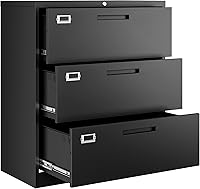
9 Best Lateral File Cabinets (October 2026)
The best lateral file cabinets include the DEVAISE 3-Drawer Rustic Brown Mobile Lateral File Cabinet for mobile printer storage, the Letaya 4-Drawer Metal Lateral File Cabinet for large paper collections, and the Letaya 3-Drawer Lateral File Cabinet with Lock for shared household records.
On this page (7 sections)
- Which lateral file cabinets suit different home offices?
- The best lateral file cabinets by use
- How do you choose the right lateral file cabinet?
- How should you assemble and load a lateral file cabinet?
- Which mistakes make a lateral file cabinet harder to use?
- How do you care for the cabinet and prevent drawer problems?
- Which lateral file cabinet should you choose?
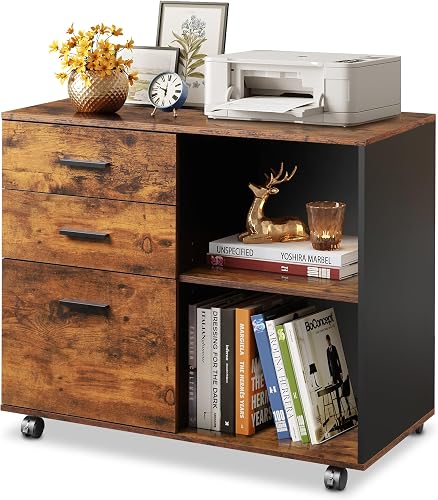
The DEVAISE 3-Drawer Rustic Brown Mobile Lateral File Cabinet is the best lateral file cabinet here for a printer, supplies and a modest paper collection. Choose a locking steel Letaya instead if most of your storage needs are hanging folders.
The key distinction is filing drawers versus supply drawers. A cabinet with 3 drawers may have only 1 drawer for folders, while another gives you 3 full filing spaces.
Read what a lateral file cabinet is if you're comparing cabinet shapes. Use the file cabinet dimensions guide to map out the space before choosing a width.
Our picks at a glance
-
1
 Best for mobile printer storage
DEVAISE 3-Drawer Rustic Brown Mobile Lateral File Cabinet
8.6/10 our score
See it on Amazon -
2
 Best for large paper collections
Letaya 4-Drawer Metal Lateral File Cabinet
8.4/10 our score
See it on Amazon -
3
 Best for shared household records
Letaya 3-Drawer Lateral File Cabinet with Lock
8.3/10 our score
See it on Amazon
- 4
 Check it
Letaya 2-Drawer Lateral Cabinet with Hanging Rails
Best for limited wall space - 5
 Check it
Letaya 3-Drawer Lateral File Cabinet with Printer Stand
Best for narrow office corners - 6
 Check it
Letaya Wide 2-Drawer Lateral File Cabinet
Best for low office layouts - 7
 Check it
Letaya 3-Drawer Metal Lateral File Cabinet
Best for light office decor - 8
 Check it
OPTYMIRA 4-Drawer Lateral File Cabinet with Lock
Best for dense paper archives - 9
 Check it
INNOD Fluted 3-Drawer Rolling Lateral File Cabinet
Best for locking mixed storage
Which lateral file cabinets suit different home offices?
Choose mixed storage for a printer station and dedicated filing drawers for a paper archive. The best fit depends on what fills the cabinet, how often you reach for it and where it will stand.
BraveBasket compared drawer purpose, supported folder sizes, dimensions, materials and access features. A higher score reflects the overall match for this guide, but a lower-ranked cabinet may suit your room better.
Start by separating your needs into files, supplies and equipment. That makes the comparison more useful than choosing the cabinet with the most drawers.
| Product | Best for | Material | Dimensions | Mobility | Our score |
|---|---|---|---|---|---|
| DEVAISE 3-Drawer Rustic Brown Mobile Lateral File Cabinet | mobile printer storage | Engineered wood | 31.3 W x 15.7 D x 24.7 H in | Five casters; 2 lockable | 8.6 |
| Letaya 4-Drawer Metal Lateral File Cabinet | large paper collections | Metal | 36 W x 16 D x 52 H in | 8.4 | |
| Letaya 3-Drawer Lateral File Cabinet with Lock | shared household records | Metal | 36 W x 16 D x 40 H in | 8.3 | |
| Letaya 2-Drawer Lateral Cabinet with Hanging Rails | limited wall space | Metal | 28.35 W x 15.74 D x 27.95 H in | 8.0 | |
| Letaya 3-Drawer Lateral File Cabinet with Printer Stand | narrow office corners | Metal | 28.35 W x 15.74 D x 39.84 H in | 8.0 | |
| Letaya Wide 2-Drawer Lateral File Cabinet | low office layouts | Metal | About 35 to 36 W x 16 D x 29 H in | 7.9 | |
| Letaya 3-Drawer Metal Lateral File Cabinet | light office decor | Metal | 36 W x 16 D x 40 H in | 7.7 | |
| OPTYMIRA 4-Drawer Lateral File Cabinet with Lock | dense paper archives | Cold-rolled steel | 35.4 W x 15.7 D x 52.36 H in | 7.5 | |
| INNOD Fluted 3-Drawer Rolling Lateral File Cabinet | locking mixed storage | Wood | 29 W x 15 D x 27 H in | Wheels with locking mechanism | 6.7 |
The best lateral file cabinets by use
The DEVAISE leads for a combined printer and supply station, while the steel models suit larger filing systems. Read each pick's trade-off before choosing, especially if you need legal folders or a cabinet beneath a desk.
DEVAISE 3-Drawer Rustic Brown Mobile Lateral File Cabinet: Best for mobile printer storage
- Two supply drawers and one file drawer
- Adjustable rails for A4 and letter files
- Open shelf and printer surface
- Five casters, 2 with locking brakes
Choose this rolling cabinet when a printer and office supplies need space beside your files. Only the bottom drawer holds hanging folders.
Pros
- Printer surface and open shelf
- Adjustable file rails
- Central caster adds support
Cons
- Requires assembly
- Only one hanging-file drawer
- Does not support legal-size hanging files
Choose DEVAISE when your desk is crowded with printer paper, stationery and a small set of active files. Its open shelf gives those loose supplies a home without using the hanging-file drawer.
The 2 upper drawers hold supplies, while the bottom drawer takes letter or A4 hanging folders. Skip it if legal folders or several drawers of records are central to your plan.
At 24.7 in high, including wheels, it offers a lower printer position than the tall steel cabinets. Measure the actual opening beneath your desk, including any crossbar or cable tray, before putting it there.
Five casters include 2 front brakes and a central support wheel. Park it before opening a drawer, and leave slack in printer cables if you'll move it.
DEVAISE states a total support limit of 150 lb, which is not a per-drawer allowance. This pick makes the most sense when supplies and equipment need as much space as paperwork.
Letaya 4-Drawer Metal Lateral File Cabinet: Best for large paper collections
- Four filing drawers
- Adjustable bars for A4, letter and legal files
- Key lock with interlock system
- Powder-coated cold-rolled steel
Four dedicated filing drawers suit a household or office with several paper categories. Choose a shorter model if you need storage beneath a desk.
Pros
- Four separate filing drawers
- Key lock secures drawers
- Assembly tools and instructions included
Cons
- Needs a broad wall space
- Requires assembly
Choose the Letaya 4-drawer when paper storage is the main job. Four separate filing drawers let you divide records by person, task or retention period without mixing everything into one crowded drawer.
Its 52 in height makes this a wall cabinet rather than a normal under-desk choice. Keep frequently used records within easy reach and assign less-used papers to the remaining drawers.
The cold-rolled steel body has a powder-coated finish, with ball-bearing full-suspension drawers. A key lock secures the drawers, and an interlock helps control drawer opening.
Assembly tools and instructions are included. Give yourself enough clear floor space to identify parts and align the cabinet before loading it.
Skip this model if you have only a few folders or need small compartments for pens and chargers. Its extra filing space earns its place when you can assign a useful job to each drawer.
Letaya 3-Drawer Lateral File Cabinet with Lock: Best for shared household records
- Three filing drawers
- Adjustable bars for A4, letter and legal files
- Key lock with interlock system
- Full-suspension ball-bearing slides
Three wide filing drawers let you divide household, financial and work records. Its lower height suits rooms where a four-drawer tower would feel too tall.
Pros
- Three dedicated filing drawers
- Key lock and interlock system
- Full-suspension ball-bearing slides
Cons
- Requires assembly
- Needs a broad floor space
Choose this black Letaya for a household filing station that separates personal, financial and work records. Its 3 dedicated filing drawers offer a useful middle ground between a small cabinet and a taller archive.
The body is 36 in wide and 40 in high, so it still needs a broad spot beside a desk or along a wall. It is not a practical under-desk choice for a normal seated workstation.
Adjustable hanging bars support the common folder sizes covered in this guide. Set the rails for your folders before filling the drawers, rather than trying to change them around a load of papers.
The key lock and interlock suit a shared room where you want to control access and drawer use. Paper instructions and assembly videos are available for setup.
Skip it if the width crowds your chair or walkway. The narrower 3-drawer Letaya below is the more useful comparison in that situation.
Letaya 2-Drawer Lateral Cabinet with Hanging Rails: Best for limited wall space
- Two filing drawers
- Adjustable bars for letter, legal and A4 files
- Single lock and 2 keys
- Full-extension ball-bearing slides
This shorter, narrower steel cabinet suits a modest file collection in a room with limited wall space. Its anti-tilt mechanism allows one drawer to open at a time.
Pros
- Narrower than the broad Letaya models
- Supports common hanging-folder sizes
- One-drawer-at-a-time mechanism
Cons
- Requires assembly
- Less filing space than taller options
Choose this 2-drawer Letaya when a broad cabinet would consume too much wall space. At 28.35 in wide and 27.95 in high, it combines a smaller footprint with dedicated hanging-file storage.
This is a sensible layout for active household files plus a separate drawer for older records. It also suits someone who wants to reach every drawer from a seated position, provided the cabinet sits close enough to the desk.
Full-extension ball-bearing slides allow access farther into the drawers. The single lock comes with 2 keys, and the anti-tilt mechanism allows only 1 drawer to open at a time.
Assembly is required, with paper instructions and videos to guide the process. Check the finished cabinet beneath your desk before loading papers.
Skip it if your current files already fill 2 drawers. Buying a shorter cabinet saves little room if you soon need a second one.
Letaya 3-Drawer Lateral File Cabinet with Printer Stand: Best for narrow office corners
- Three filing drawers
- Adjustable bars for letter, legal and A4 files
- Key lock and anti-tilt mechanism
- Full-extension ball-bearing slides
This narrower cabinet adds a third filing drawer without taking the wall width of the larger Letaya models. Its top can serve as a printer stand when equipment fit and loading limits allow.
Pros
- Narrow body with three filing drawers
- Adjustable hanging bars
- Lock and anti-tilt mechanism
Cons
- Requires assembly
- Too tall for most under-desk spaces
Choose this narrower 3-drawer Letaya if you need another filing level but cannot spare the width of the broad models. It uses 28.35 in of wall width, making it worth considering beside a desk in a smaller office.
The trade-off is height: at 39.84 in, it belongs next to the desk rather than beneath most worktops. Keep that taller surface in mind if you plan to use it as a printer stand.
Measure the printer base, then allow room to load paper, open trays and reach controls. A printer that fits on top can still be awkward if its scanner lid meets a shelf.
The cabinet includes a key lock, full-extension slides and a one-drawer-at-a-time anti-tilt mechanism. Its steel body has a powder-coated finish.
Skip it if a low printer position is your priority. Pick it for the third filing drawer and narrower body first, then assess the top surface as a secondary use.
Letaya Wide 2-Drawer Lateral File Cabinet: Best for low office layouts
- Two filing drawers
- Low, wide layout
- Adjustable bars for A4, letter and legal files
- Key lock with interlock system
Choose this wide two-drawer cabinet when you want filing storage below taller wall furniture. Plan around the larger width when measuring its space.
Pros
- Low profile
- Key lock with interlock system
- Assembly tools and instructions included
Cons
- Requires assembly
- Width needs confirmation for a tight fit
Choose this wide 2-drawer Letaya if you want a lower filing unit along a wall. Its 29 in height keeps it below the taller cabinets, though that alone does not guarantee it fits beneath your desk.
The width is described as about 35 to 36 in. Confirm the exact width before ordering for a tight gap, and use the larger measurement when planning floor space.
This layout suits someone who prefers 2 broad filing zones rather than several stacked drawers. Assign each drawer a clear category so the extra width does not become a place for loose piles.
It has adjustable hanging bars, a key lock, an interlock and ball-bearing full-suspension drawers. Assembly tools and instructions are included.
Skip it if your main constraint is wall width. The narrower 2-drawer Letaya is the better starting point, while this model works where a low profile matters more than a compact body.
Letaya 3-Drawer Metal Lateral File Cabinet: Best for light office decor
- Three filing drawers
- Adjustable bars for A4, letter and legal files
- Key lock with interlock system
- White powder-coated steel with black hardware
This white cabinet suits a bright office that needs three dedicated filing drawers. It has the same outer dimensions as the black three-drawer Letaya.
Pros
- White finish with black hardware
- Adjustable hanging bars
- Key lock and interlock system
Cons
- Requires assembly
- Needs a broad wall space
Choose this white Letaya when a black cabinet would feel too prominent in a bright office. The white body with black hardware changes the look without changing the basic filing role.
Its dimensions match the broad black 3-drawer Letaya. Compare those two by finish and room fit rather than assuming one drawer count means a different amount of floor space.
Three filing drawers suit records divided among household members or work tasks. Adjustable hanging bars let you set up the drawers around your folder sizes.
The steel cabinet includes a key lock and interlock, along with assembly tools and instructions. Foam and metal corner protection help protect the edges in transit, but inspect panels before assembly.
Skip this model if you want a low cabinet or a piece that moves with your workspace. For help choosing where it should stand, see our home office file cabinet guide.
OPTYMIRA 4-Drawer Lateral File Cabinet with Lock: Best for dense paper archives
- Four filing drawers
- OPTYMIRA specifies a 110 lb maximum per drawer
- Adjustable rails for legal, letter and A4 files
- Single lock, interlock and 2 keys
Four filing drawers and a stated per-drawer load limit suit buyers planning a dense paper archive. Check usable drawer space as well as weight before choosing it.
Pros
- Brand specifies a per-drawer load limit
- Four drawers with adjustable rails
- Assembly video and instructions
Cons
- Tall cabinet needs planned placement
- Requires assembly
Choose OPTYMIRA when you need a larger archive and a stated drawer load limit is part of your buying decision. OPTYMIRA specifies up to 110 lb per drawer, so it gives you a weight figure to check against your storage plan.
Each drawer's interior measures 32.4 in wide, 14 in deep and 9.8 in high. Check bulky folders and any non-file items against those usable dimensions rather than the cabinet's outer size.
Four drawers, adjustable hanging rails and full-extension slides suit separate groups of records. One lock with 2 keys secures the drawers, while the anti-tilt mechanism limits opening to one at a time.
Review the installation video before assembly, as OPTYMIRA recommends. Position the cabinet before filling it so you do not have to relocate a loaded archive.
Skip it if you mainly need a printer stand or a few household folders. The drawer limit is a ceiling, not a reason to fill every available space.
INNOD Fluted 3-Drawer Rolling Lateral File Cabinet: Best for locking mixed storage
- Two supply drawers and one file drawer
- Bottom rails for letter and A4 files
- One lock secures all three drawers
- Wheels with locking mechanism
This wood-finish rolling cabinet combines supplies, files and printer space with a lock for all three drawers. It suits a small paper collection rather than a full archive.
Pros
- Wood finish and open shelf
- Lock secures all three drawers
- Locking wheels
Cons
- Requires assembly
- Only one hanging-file drawer
- Does not support legal-size hanging files
Choose INNOD if you want a wood-finish printer station with locking drawers. One lock secures all 3 drawers, which makes it a useful alternative to DEVAISE when access control is a priority.
The layout favors mixed storage: 2 upper supply drawers, a bottom drawer for letter or A4 hanging files, an open shelf and a top surface. It suits a small office whose loose items outnumber its folders.
At 29 in wide and 27 in high, it offers a different fit from the lower, wider DEVAISE. Measure the whole work area rather than choosing between them by appearance alone.
Locking wheels help keep the cabinet parked. INNOD states a total support limit of 150 lb, and illustrated instructions cover assembly.
Skip it if legal files or several filing drawers are essential. Its role is to gather supplies, equipment and a modest file collection into one movable piece.
How do you choose the right lateral file cabinet?
Choose drawer purpose first, then room fit and folder size. Locks, wheels and finish help narrow the choices after those basic needs are settled.
How much room does a lateral file cabinet need?
A lateral file cabinet needs space for the body, an open drawer and the person using it. A cabinet that fits against a wall can still block a chair, door or walking route.
Mark the cabinet footprint with removable tape. Then map out the open drawer area and stand where you would sort papers.
Measure the narrowest part of any under-desk opening, including legs, braces and cable trays. Leave room to reach wheel brakes if you're considering rolling storage.
Outer depth does not tell you the exact drawer travel. Check that clearance before choosing a cabinet for a tight passage.
For common measurements, read how big a file cabinet is. Our lateral versus vertical file cabinet guide helps if a wide body is proving difficult to place.
Which drawer count works for your files?
Count usable filing drawers, not drawer fronts. The DEVAISE and INNOD each have one hanging-file drawer, while the steel options dedicate their drawers to filing.
Gather your current folders before shopping and remove papers you no longer need to keep. Group the remaining records by how often you use them.
Leave enough space to slide folders apart and read labels without pulling out a whole section. A tightly packed drawer slows filing and encourages papers to collect on the desk.
Choose more drawers when you need separate categories, not simply because a taller cabinet seems more useful. Our broader guide to file cabinets for home covers other storage layouts.
Which file sizes should the rails fit?
Match the hanging folders as well as the papers. Letter and legal documents need the right folder size, and the hanging hooks must sit securely on the cabinet rails.
The steel picks here support letter, legal and A4 files. DEVAISE and INNOD support letter and A4, so they are poor choices for an existing legal-size system.
Do not assume a wide drawer accepts every folder in every direction. Rail positions determine the workable arrangement, especially when mixing sizes.
Our guide to hanging folders in a file cabinet explains how to check support and spacing.
Do you need a lock, wheels or a printer surface?
Choose a lock for access control, wheels for repositioning and a top surface for equipment. These solve different problems, so rank them by how you work.
A basic file lock helps keep casual access in check. It does not mean a cabinet has fire protection, water protection or the security of a safe.
Wheels help when you rearrange a workspace, but a loaded cabinet still needs careful movement. Compare rolling and stationary file cabinets if mobility is driving your choice.
For a printer, check the base, paper trays, lid clearance and cable route. A support limit for the whole cabinet is not automatically the top's allowed load.
How should you assemble and load a lateral file cabinet?
Assemble the cabinet close to its final position, then check drawer movement before adding papers. Correct alignment is easier to address while the cabinet is empty.
Prepare the space and parts
Clear enough floor space to lay out panels and hardware without bending or scratching them. Protect the floor and check parts for damage before starting.
Follow the model's instructions in order. Do not force a rail, substitute a screw or skip an interlock part because it seems to slow assembly.
Keep packaging until you have checked the completed cabinet. If a part does not align, stop and review its orientation before tightening further.
Check movement before loading
Open and close each drawer while empty, then check the lock and any interlock. A drawer that binds before loading needs attention before paper weight makes the problem harder to diagnose.
Set the hanging bars and try a few empty folders. Confirm that hooks stay seated, labels clear the drawer and papers do not catch as it closes.
Put the cabinet on a stable, level surface and follow any anchoring directions. Wheel brakes and anti-tilt mechanisms serve a purpose, but careful placement still matters.
Add files in a clear order
Start with the bottom drawer and keep heavier contents low. Spread files evenly, follow all load limits and open only the drawer you need.
Keep active records easy to reach, with archive files in less convenient positions. Avoid using the top as overflow storage for heavy stacks.
Label drawers and folders before the first full filing session. Our home filing system guide can help you choose categories that remain useful as papers arrive.
Which mistakes make a lateral file cabinet harder to use?
The biggest mistakes are buying the wrong drawer layout, crowding the room and overfilling folders. Each can turn an otherwise suitable cabinet into storage you avoid using.
- Counting every drawer as file storage. Supply drawers are useful, but they do not replace hanging-file space.
- Measuring only the closed cabinet. Check drawer travel, doors, chair movement and your route through the room.
- Filling every gap immediately. Leave space for new records and enough room to separate folders.
- Choosing height without checking reach. Make sure you can read labels and lift folders comfortably from the drawers you'll use most.
- Treating the lock as complete document protection. Keep backup copies of important records and choose storage that matches their value.
- Planning around an assembly time estimate. Leave time to sort hardware, align parts and check drawer movement.
Avoid placing daily files behind a chair that must be moved every time. Easy access matters more than having the cabinet close to the desk in a floor plan.
How do you care for the cabinet and prevent drawer problems?
Keep the cabinet clean, level and free of loose paper around the slides. Most routine problems are easier to address before a drawer becomes difficult to move.
Wipe dust with a soft cloth and dry any moisture after cleaning. Use mild care methods suited to the finish, and avoid soaking wood panels or leaving water along steel seams.
Check that hanging-folder hooks remain on their rails. Loose sheets, overstuffed folders and items projecting above the drawer can obstruct closing.
If a drawer starts catching, remove loose items and check the load before forcing it. Follow the cabinet's care directions before applying lubricant or adjusting slides.
Close drawers before moving a rolling model and secure loose equipment separately. Follow the movement instructions, and unload it when needed rather than pushing a heavy cabinet across a threshold.
Which lateral file cabinet should you choose?
Choose the DEVAISE for a printer-and-supply station with a small set of letter or A4 files. Choose INNOD for the same general role when locking all the drawers matters.
For a paper-focused lateral file cabinet, pick the Letaya 4-drawer for more separate filing zones or a broad 3-drawer Letaya for a shorter archive. Choose the white version when it better suits the room.
Pick the narrow 2-drawer Letaya for limited wall space, the narrow 3-drawer for another filing level, or the wide 2-drawer when a low layout matters most. Consider OPTYMIRA when its stated drawer load limit helps you plan a dense archive.
Before ordering, settle the folder sizes, mark the open-drawer space and assign a purpose to each drawer. Use the home office file cabinet guide to make the final choice around your daily workspace.
Our top 3 picks at a glance
-
1
Best for mobile printer storage
DEVAISE 3-Drawer Rustic Brown Mobile Lateral File Cabinet
8.6/10 our score
See it on Amazon -
2
Best for large paper collections
Letaya 4-Drawer Metal Lateral File Cabinet
8.4/10 our score
See it on Amazon -
3
Best for shared household records
Letaya 3-Drawer Lateral File Cabinet with Lock
8.3/10 our score
See it on Amazon
Frequently asked questions
What is a lateral file cabinet?
A lateral file cabinet holds folders in wide drawers within a broad cabinet body; the hanging rails determine folder direction and supported sizes, so width alone does not tell you which papers fit. Compare layouts in our lateral vs. vertical file cabinet guide before choosing a shape for your room.
What size lateral file cabinet should I get?
Choose the smallest cabinet that holds your current folders with room for growth and fits your room with a drawer open. Measure width, depth, height and the approach to the cabinet; our file cabinet dimensions guide explains the measurements to check before you commit floor space.
Are lateral file cabinets safer than vertical ones?
Neither layout is automatically safer; stable placement, correct assembly and careful loading matter for both shapes, even when a cabinet has an interlock. Follow all anchoring directions and keep unused drawers closed; read how to keep a file cabinet from tipping for practical placement and loading advice.
Do lateral file cabinets fit letter and legal folders?
Some fit both letter and legal hanging folders, but the rail arrangement must support each size. The steel picks here accommodate both, while DEVAISE and INNOD support letter and A4; our guide to hanging folders in a file cabinet explains how to check the rails before filling a drawer.