File Cabinet vs Filing Cabinet: Is There a Difference? (October 2026)
In a file cabinet vs filing cabinet comparison, both names mean the same kind of document storage. Choose by drawer layout, folder fit and available space.
On this page (9 sections)
- File cabinet vs filing cabinet: what is the difference?
- Which cabinet shape should you choose?
- How do you measure the space for a cabinet?
- How do you check folder fit and useful capacity?
- Which lock and drawer features matter?
- How should you assemble and load a filing cabinet?
- How do you keep files accessible and care for the cabinet?
- What mistakes should you avoid before ordering?
- Should you buy a file cabinet or filing cabinet?
File cabinet and filing cabinet mean the same kind of document storage. In a file cabinet vs filing cabinet comparison, the useful differences are drawer layout, folder fit, size and access.
Neither name means a cabinet is larger, more secure or better suited to an office. You can find narrow vertical cabinets and wide lateral cabinets under either term.
The 2 cabinets below show the choice that matters: a tall unit for a narrow gap or a wider unit for a dedicated filing area. Start with your papers and room measurements, then choose the shape.
 Best for narrow home offices
BYNSOE 4-Drawer Vertical File Cabinet with Lock
 Best for wall-side filing
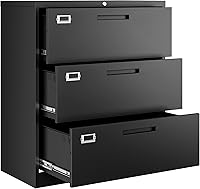
Letaya 3-Drawer Lateral File Cabinet with Lock
File cabinet vs filing cabinet: what is the difference?
There is no standard difference between the names. Both describe furniture used to organize documents, usually in drawers.
Don't narrow your search to just one phrase. Search both names with useful details such as “vertical,” “lateral,” “legal folders” or the width your room can accept.
The name also doesn't promise hanging rails, a lock or any particular number of drawers. Those are separate features to check before buying.
Does “filing cabinet” mean office furniture?
No. A filing cabinet can hold household records just as well as business paperwork.
Choose storage based on how often you reach for documents. Bills awaiting action belong within easy reach, while old records can go in a less convenient drawer or a separate archive.
For a workable starting point, our guide on how to set up a home filing system explains how to group papers before assigning drawer space.
File cabinet vs filing cabinet: which term should you search?
Use either term, then add the features you need. Searching by folder size and cabinet shape will help more than choosing between “file” and “filing.”
Don't assume a cabinet called “office storage” has full-size file drawers. Confirm that the drawers support your folders rather than relying on the product name or photo.
Which cabinet shape should you choose?
Choose a vertical cabinet for a narrow placement area and a lateral cabinet when you have a wider stretch of floor. Drawer count alone won't tell you which stores your papers more effectively.
A wide drawer can hold file groups differently from a narrow one. Usable capacity depends on the drawer interior, hanging-bar arrangement and how thick your folders become.
When does a vertical file cabinet fit better?
A vertical cabinet suits a home office with a narrow gap beside a desk or along a wall. It also works when you want separate drawers for distinct groups, such as household records, work files and archived papers.
The BYNSOE measures 17.71 in deep, 15 in wide and 50.11 in tall. Its 4 drawers let you divide records by category without putting every folder in one long sequence.
Choose it when you can leave the front clear and reach the upper drawer comfortably. Skip it beneath a desk, below low shelving or where opening a drawer would block a doorway.
Its tall shape also makes sensible loading important. Put heavier files in lower drawers and avoid using the top as a place to stack bulky objects.
When does a lateral filing cabinet fit better?
A lateral cabinet suits a dedicated filing area along a wall, especially when you prefer broader drawer groups. It can keep related files together without dividing them among as many levels.
The Letaya measures 16 in deep, 36 in wide and 40 in tall, with 3 drawers. Choose it if your room has the width and you prefer this drawer layout.
Skip it for a slim gap beside furniture. Its height also means you should measure any desk opening rather than treating it as an automatic under-desk choice.
For a closer look at the shape, read what a lateral file cabinet is. Our lateral vs vertical file cabinet comparison covers the layout decision in more detail.
How do you measure the space for a cabinet?
Measure the resting footprint and the working area separately. A cabinet can fit against a wall yet leave too little room to open a drawer and retrieve a folder.
Mark the cabinet's width and depth on the floor with removable tape. Check whether its corners would interfere with a chair, doorway or route through the room.
Next, allow room in front for drawer travel and your body. Don't guess the opening distance from the cabinet's depth, since drawer extension varies by design.
Check height beneath shelves, windowsills and desktops. Desk aprons, crossbars and cable trays can reduce the opening even when the desktop looks high enough.
Measure the delivery route too, including narrow doors and tight turns. Both cabinets require assembly, so plan a clear work area and follow the instructions on when to move the cabinet into position.
Our file cabinet dimensions guide explains the measurements that matter. Write yours down before comparing models so a promising photo doesn't distract you from a poor fit.
How do you check folder fit and useful capacity?
Match the cabinet to your hanging folders and filing volume, rather than buying by drawer count. Start by measuring the folders you already use.
US letter paper measures 8.5 × 11 in, while legal paper measures 8.5 × 14 in. A4 is a different size, and hanging folders extend beyond the paper to rest on rails.
Both cabinets have adjustable supports for A4, letter and legal hanging folders. Set those supports for your chosen folder size before loading documents.
Support for several sizes doesn't mean every arrangement works at once. Plan which size each drawer will hold, then check that the folders hang level and move freely.
Count folders before choosing drawer space
Gather the papers you intend to keep and sort them into groups. Include thick folders, envelopes and records that will grow, rather than counting only thin folders.
Leave room to move files aside while reading tabs. A drawer packed tightly from front to back makes daily filing harder and encourages papers to pile up elsewhere.
If your collection is small and rarely used, either cabinet may be more furniture than you need. Choose drawers for a regular filing routine, rather than as a reason to keep unnecessary paper.
For help with the hardware, see how to hang folders in a file cabinet. Proper rail spacing prevents folders from slipping off or dragging inside the drawer.
Which lock and drawer features matter?
Choose a lock for routine access control, and check drawer movement for everyday use. A key lock doesn't guarantee fire protection, water protection or resistance to forced entry.
The BYNSOE uses one lock to secure all drawers and includes 2 keys. The Letaya has a folding key lock and an interlocking drawer system.
Keep a spare key somewhere separate from the cabinet. A key stored in the drawer it opens won't help when the other key goes missing.
For more cabinet options, see our guide to file cabinets and locking features. Our article on replacing a lost file cabinet key covers what to do if access becomes a problem.
What do drawer slides and interlocks do?
Drawer slides support movement, while an interlock limits drawer opening to help reduce tipping risk. These features serve different purposes.
The BYNSOE has full-extension ball-bearing slides for reaching files at the back. Letaya uses ball-bearing full-suspension drawers.
BYNSOE specifies that opening one drawer prevents the others from opening. Follow the instructions for each cabinet's interlock and never force a second drawer open.
An interlock doesn't replace careful loading or stable placement. Keep children from climbing drawers, and don't use an open drawer as a shelf or step.
How should you assemble and load a filing cabinet?
Assemble the cabinet in the order its instructions give, then check every drawer before adding files. Uneven placement or a poorly seated drawer can make a new cabinet difficult to use.
Lay out the panels and hardware in a clear area. Protect the floor and keep small parts together so missing hardware doesn't become a last-minute problem.
Place the completed cabinet on a firm, level surface. Check the maker's guidance for anchoring and use any required restraint as directed.
Open and close empty drawers one at a time. Check that they sit evenly, the lock works and the interlock behaves as the instructions describe.
What if a BYNSOE drawer sits too high?
Check the drawer's connection to its rails before forcing it shut. BYNSOE identifies incomplete rail engagement as a possible cause of a drawer sitting too high to close.
Follow its instructions to reinstall the drawer and fully engage the rail snaps. Stop if parts bind or appear damaged rather than pushing harder against resistance.
Once everything moves correctly, add files gradually, starting with heavier records low down. Follow any load limits in the assembly instructions; cabinet size alone doesn't tell you how much weight a drawer can carry.
How do you keep files accessible and care for the cabinet?
Keep files loosely grouped, clearly labeled and easy to return. A simple system you maintain is more useful than detailed categories you stop using.
Choose labels based on how you'll look for a document later. “Insurance,” “Taxes” and “House” may work better for household records than a complicated numbering system.
Use a small action folder for papers that need a reply or payment. Move finished paperwork into its proper folder so open tasks don't disappear among archived records.
Keep drawers clear of loose objects
Don't drop pens, clips or loose sheets beside hanging folders. Small items can obstruct movement, and papers can catch where you can't see them.
If a drawer starts resisting, remove enough contents to inspect it safely. Check for trapped folders and loose items before applying more force.
For the cabinet surface, use a soft cloth and mild cleaner compatible with its finish. Dry it afterward and keep moisture away from locks and slides.
Both models have steel construction with coated surfaces. Wipe spills promptly, and don't treat a surface coating as protection for the documents inside.
Decide whether the cabinet needs to move
Choose furniture designed for mobility if rearranging your workspace is part of your routine. A loaded freestanding cabinet isn't a convenient substitute for a mobile unit.
Both examples here have freestanding pedestal bases. If you need wheels, see our comparison of file cabinets on wheels vs stationary cabinets.
Avoid dragging a loaded cabinet across the floor. Plan its location before filling it, then follow the moving guidance in its instructions if it must be relocated.
What mistakes should you avoid before ordering?
Avoid choosing by name, drawer count or appearance alone. The most costly mistake is buying a cabinet that fits your idea of storage but doesn't fit your room or folders.
Don't assume a wider cabinet must hold more than a taller one. Compare usable drawer space and your file arrangement before deciding which offers enough capacity.
Don't buy a tall cabinet if the upper drawer will be awkward to reach. Check reach from a comfortable standing position, especially beneath shelves.
Don't expect a key lock to cover every security need. For irreplaceable records, decide separately whether you need storage with a stated protection rating.
Don't plan to fill every inch on day one. Leave space for new papers and enough slack to lift folders out without bending them.
Should you buy a file cabinet or filing cabinet?
For a file cabinet vs filing cabinet decision, choose the layout that fits your room and filing routine. The wording on the box shouldn't decide the purchase.
Pick the BYNSOE when you have a narrow placement area, clear space above and several file groups to separate. Pick the Letaya when you have a wider wall area and prefer organizing records across broader drawers.
Skip both if you need frequent mobility, a low under-desk unit or storage for only a few folders. Settle those needs before comparing locks or finishes.
Before ordering, confirm your room measurements, folder size and drawer-opening space. Use our file cabinet buying guide to check the remaining choices against your own filing plan.
Sources
Frequently asked questions
Is a file cabinet different from a filing cabinet?
No, file cabinet and filing cabinet usually mean the same kind of furniture for storing documents; neither term tells you the drawer layout, folder size or security level. Compare those features directly, and use both names when searching so you don't overlook a suitable cabinet.
What is the difference between a vertical and lateral file cabinet?
A vertical cabinet uses a narrower frame, while a lateral cabinet spreads its drawers across a wider frame; folder direction depends on the rails and drawer design. Choose by the space available and how you want to group files, then confirm the exact dimensions before ordering.
Which file cabinet takes up less floor space?
A vertical cabinet often needs less floor width, but total floor space depends on both width and depth; you also need space for an open drawer and your body. Measure the cabinet's resting footprint separately from the area you'll need while using it.
Can both cabinet types hold letter and legal folders?
Yes, either layout can support letter and legal hanging folders when its rails are designed for them; both cabinets compared here also support A4 hanging folders. Check the rail arrangement before filling drawers, especially if you want different paper sizes in the same cabinet.
Should I buy a file cabinet or a file box?
Choose a cabinet for records you reach often and want separated into drawers; choose a file box for a small collection, an occasional archive or papers that need to travel. Sort your documents first, since a few folders may not justify a permanent piece of furniture.